




The best social proof apps in 2026 are ProveSource for most sites (a real free plan and low paid tiers),  Judge.me for Shopify reviews, and Senja for SaaS and lead-gen testimonials.
Sales popups such as Fomo, TrustPulse and WiserNotify show recent signups and purchases.
But in our archive the biggest social proof wins come from inline lines and reviews near the buy button, not corner popups.
How we picked: we read each vendor's public docs and pricing page, checked ratings on the Shopify App Store and WordPress.org, and matched each tool type to real A/B tests in our archive. We have not used these tools ourselves.
Social proof apps compared
| Tool | Best for | Starting price (as of November 2026) | Free plan or trial | Rating (source) |
|---|---|---|---|---|
| ProveSource | Sales and signup popups on any site | $24/month billed yearly ($29 monthly) | Free plan, 1K monthly visitors | 5.0, 90 reviews (Shopify App Store) |
| Fomo | Notifications fed by many integrations | $25/month | Free plan (Shopify) and 14-day trial | 4.5, 154 reviews (Shopify App Store) |
| TrustPulse | WordPress and WooCommerce sites | $5/month billed annually | None listed | 4.5, 35 ratings (WordPress.org) |
| WiserNotify | Many widget types plus notification A/B tests | $59/year (Basic); Pro from $16/month | 7-day trial, no free plan | Not verified |
| Nudgify | Low-cost nudges on unlimited sites | $9/month | Free plan (1,000 impressions) and 7-day trial | 4.6, 60 reviews (Shopify App Store) |
| Judge.me | Shopify product reviews on a budget | $15/month | Free plan and 15-day trial | 5.0, 49,612 reviews (Shopify App Store) |
 Loox | Photo and video reviews | $49.99/month (300 orders) | Free plan and 14-day trial | 4.9, 10,029 reviews (Shopify App Store) |
 Okendo | Reviews plus loyalty and referrals | $19/month | Free plan and 14-day trial | 4.8, 1,447 reviews (Shopify App Store) |
| Trustpilot | Third-party reviews for any business | $319/month per domain, billed annually | Free plan; 14-day trial of Plus | Not verified |
| Senja | SaaS and lead-gen testimonials | $29/month (Starter) | Free plan, 15 testimonials | Not verified |
Three kinds of tool are on this list.
Notification apps (1-5) show "someone just bought" popups, live visitor counts and stock nudges.
Review apps (6-9) collect and display customer reviews.
Senja (10) collects testimonials for sites that sell services or software.
For more review options see the best Shopify review apps, and for email and offer popups see Shopify popup apps.
The 10 best social proof apps
1. ProveSource
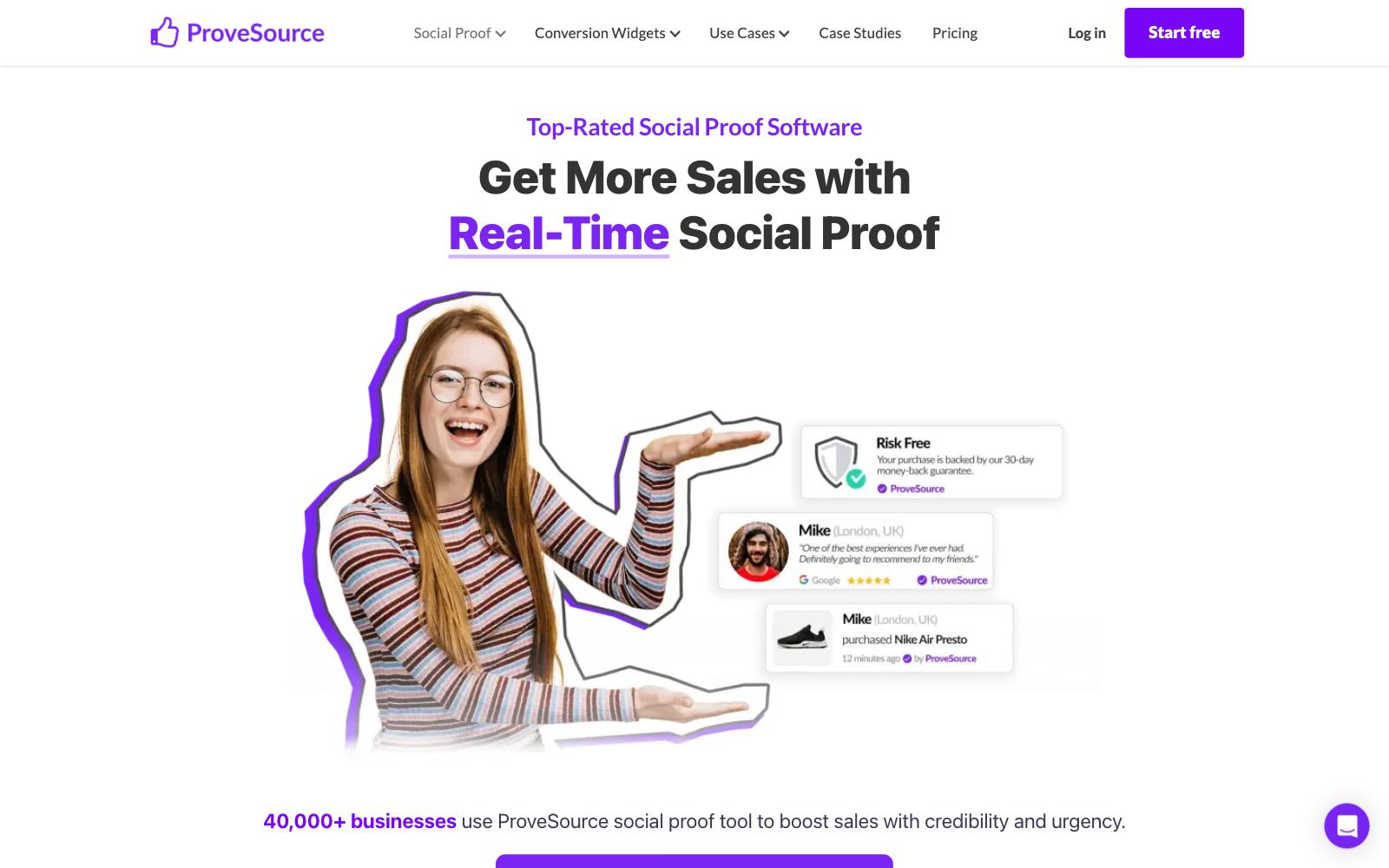
Best for: small and mid-size sites that want sales and signup popups without a big bill.
What it does: ProveSource shows recent purchases, signups and live visitor counts as small notifications.
It works on Shopify and on any site where you can add a script, so it fits SaaS trials and lead forms too.
Key features:
- Recent activity, live visitor and counter notifications
- Unlimited impressions on every plan
- All features on every plan, including the free one
- Pricing based on monthly unique visitors
Pros:
- A free plan that is usable for small sites
- Paid tiers start low and step up by traffic
- Same feature set at every tier, so no upsell for basics
Cons:
- The free plan shows ProveSource branding
- Cost climbs with traffic: 200K visitors is $91/month billed yearly
- Not a review app, so you still need one for product pages
Pricing: free for 1K monthly unique visitors; Starter $24/month billed yearly or $29 monthly for 20K; Growth $45/month billed yearly for 50K, per the ProveSource pricing page (as of November 2026).
Rating: 5.0 from 90 reviews on the Shopify App Store.
In our archive: Endless Gain showed social proof messages to new visitors at Fragrance Direct, a retailer few shoppers knew.
Conversion rate rose over +8%. New visitors are the audience these popups suit best.
2. Fomo

Best for: businesses that want notifications pulled from many sources, such as  Stripe, Shopify or a CRM.
What it does: Fomo is one of the first sales popup apps.
It shows purchases, reviews, low stock and active visitor counts, and connects to many other apps.
Note that fomo.com now redirects to an unrelated crypto trading app; the social proof product lives at usefomo.com.
Key features:
- Sales, review, low-stock and add-to-cart notifications
- Active visitor counter and roundup notifications ("12 people bought this today")
- API access and unlimited integrations on all paid plans
- Inline (on-page) social proof on Business and above
Pros:
- Roundup messages give a count instead of one stranger's name
- Works well outside Shopify through its integrations
- Pricing is by notifications, not visitors
Cons:
- Inline social proof, the format that wins most in our archive, needs the $75 plan
- Starter covers only one website
- The old domain change can confuse anyone searching for it
Pricing: Starter $25/month (8,000 notifications), Business $75/month, Pro $149/month, two months free on annual plans, per the Fomo pricing page.
The Shopify listing also shows a free plan of up to 1,000 notifications a month and a 14-day trial (as of November 2026).
Rating: 4.5 from 154 reviews on the Shopify App Store.
In our archive: Conversio added popularity messages to Hunter Boots product pages, using  AB Tasty's social proof feature rather than Fomo.
Conversion rose +9% in the UK after a proof of concept and several rounds of tuning.
3. TrustPulse
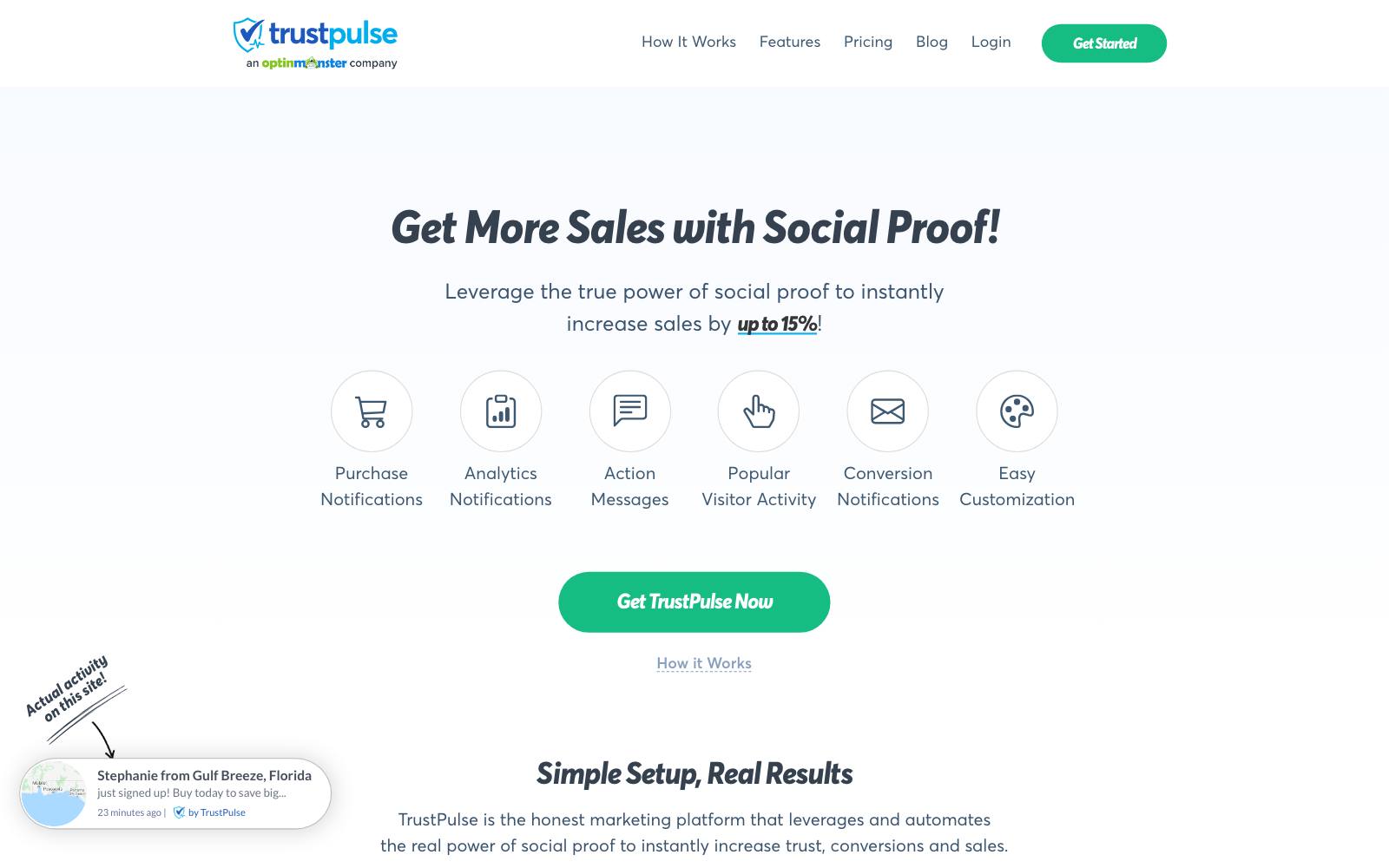
Best for: WordPress and WooCommerce sites.
What it does: TrustPulse comes from the team behind OptinMonster.
It captures signups and purchases on your site and shows them as "recent activity" or "on fire" notifications, with a WordPress plugin for setup.
Key features:
- Recent activity, on-fire and welcome notifications
- Activity capture from form clicks, Zapier and its own tracking
- Page-level targeting and timed display
- Analytics notifications from the Plus plan
Pros:
- The lowest starting price on this list
- Simple point-and-click setup for WordPress users
- Unlimited campaigns on every plan
Cons:
- The WooCommerce integration and branding removal need the Pro plan
- Low visitor caps: Basic covers 1,500 unique visitors
- No free plan on the pricing page
Pricing: Basic $5/month, Plus $10/month, Pro $19/month and Growth $39/month, all billed annually, per the TrustPulse pricing page (as of November 2026).
Rating: 4.5 out of 5 from 35 ratings on WordPress.org.
In our archive: Decathlon UK added a line about recent product views under its reviews.
Transactions rose +2.4%. A modest, real gain from a small activity message.
4. WiserNotify
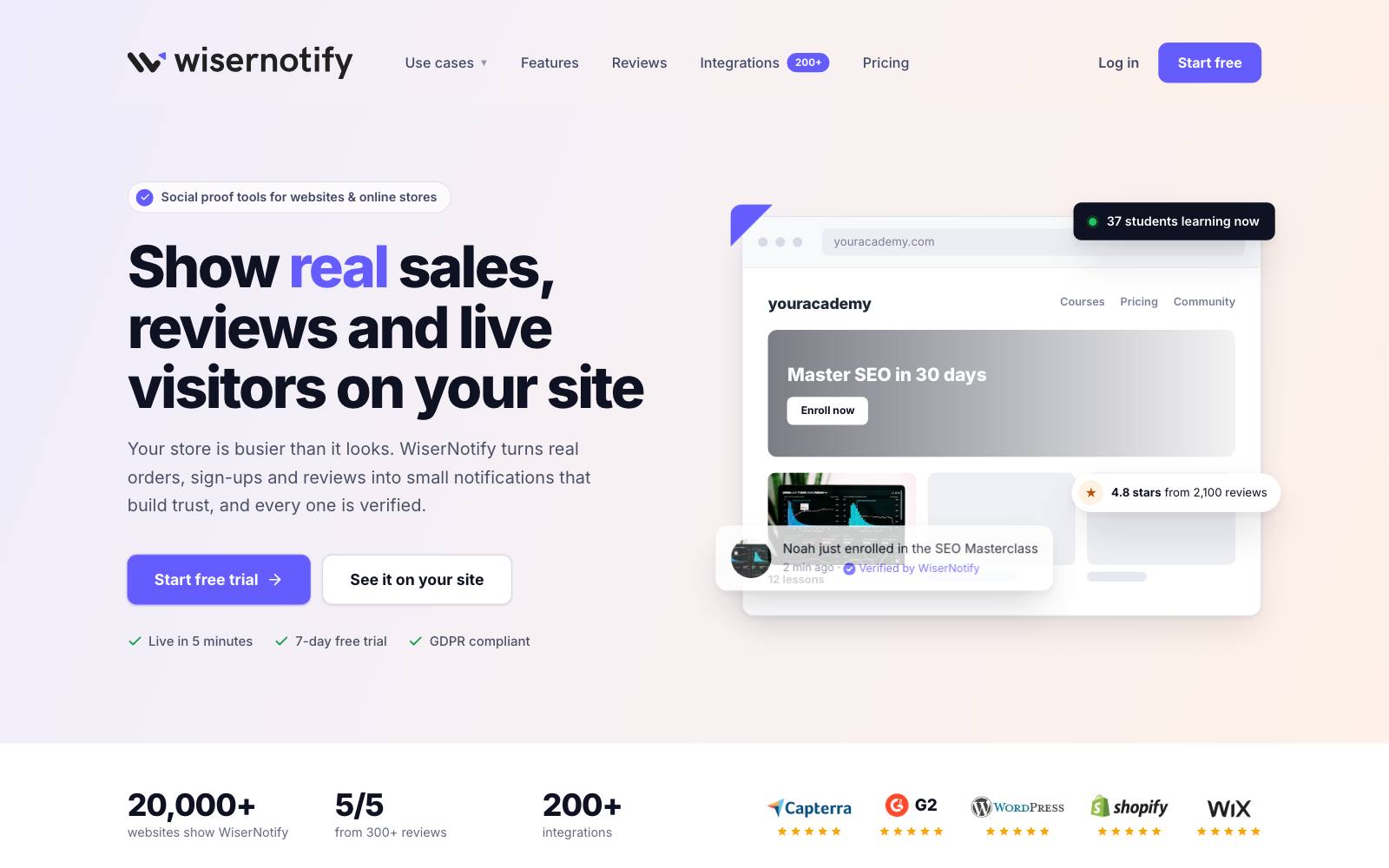
Best for: teams that want every widget type and want to A/B test the notifications themselves.
What it does: WiserNotify offers sales popups, live visitor counts, review widgets, counters and countdowns in one app.
It works across multiple domains and connects to 200+ tools.
Key features:
- Sales popups, live visitors, review and counter widgets
- A/B testing and goal tracking of notifications (Pro)
- Auto form capture for lead-gen sites
- Inline social proof messages (Growth)
Pros:
- Lets you split test the message, which most popup apps don't
- Multiple websites on one plan
- Templates for ecommerce, SaaS and travel
Cons:
- No free plan
- Basic is yearly only and has limited templates
- Inline messages sit on the Growth tier, from $65/month
Pricing: Basic $59/year for 5,000 visitors a month; Pro $16 to $40/month; Growth $65 to $275/month; 7-day free trial and 14-day money-back guarantee, per the WiserNotify pricing page (as of November 2026).
In our archive: ConvertPolo added live viewer counts such as "24 people are viewing this item" to Attrangi's mobile product listings.
Conversion rate rose +19.3%. The case study does not say whether the counts were exact, so keep yours real.
5. Nudgify
Best for: small businesses running several sites on a tight budget.
What it does: Nudgify shows "nudges" for recent purchases, reviews, low stock and free delivery.
Every plan includes unlimited notifications and unlimited websites.
Key features:
- Recent sales, review and low-stock nudges
- Free delivery nudges
- Unlimited websites on every plan
- One-off visitor boosts if you go over your limit
Pros:
- Paid plans start at $9/month
- A free plan for testing the idea
- Shopify app plus a script for other platforms
Cons:
- The free plan caps you at 1,000 impressions a month
- When you hit your visitor limit, nudges stop until next month
- Lifetime plan purchases are non-refundable
Pricing: $9, $29, $49 and $89 a month, with an Enterprise plan at $189, per the Nudgify pricing page (as of November 2026).
Rating: 4.6 from 60 reviews on the Shopify App Store.
In our archive: ConvertPolo added low-stock and scarcity messages to Sparify's mobile cart.
Conversion rate rose +16.49%. But a Conversion Fanatics test with an urgency message only above the order button did 32% worse than the control.
6. Judge.me
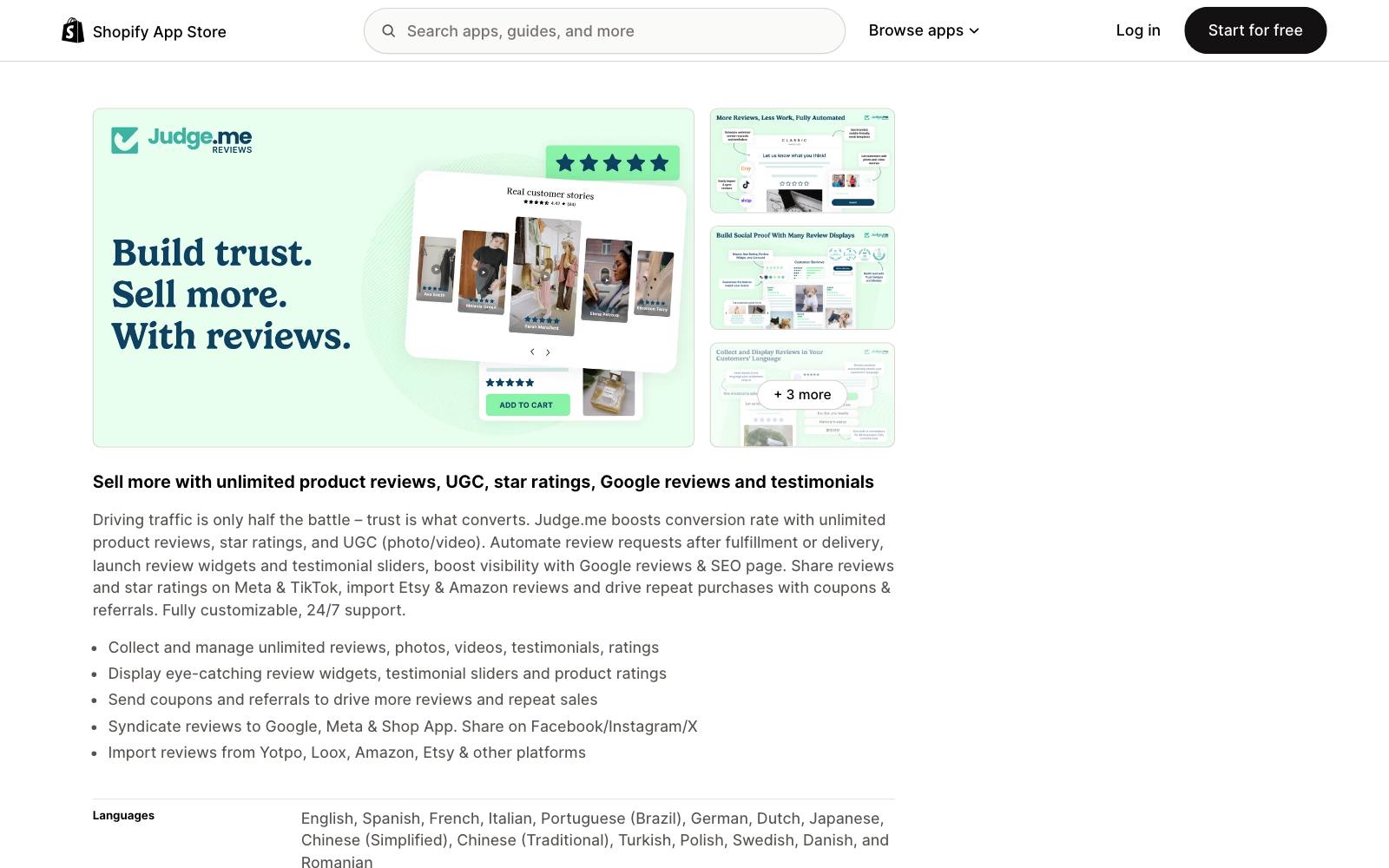
Best for: Shopify stores that want reviews for little or no money.
What it does: Judge.me collects product and store reviews, including photos and videos, and shows them as widgets and star ratings.
It syncs reviews to Google, Meta and the Shop app.
Key features:
- Unlimited reviews and photo/video reviews on the free plan
- Star rating badges and review widgets
- Google reviews sync and rich snippets
- Importer for reviews from
 Yotpo, Loox, Amazon and Etsy
Pros:
- The most-reviewed app on this list
- Strong free plan; the paid plan is one flat price
- Easy to move from another review app
Cons:
- Built around Shopify; less useful for SaaS or lead gen
- Q&A and extra widgets need the paid plan
- Default widgets look similar across many stores
Pricing: free plan, or $15/month with a 15-day free trial, per the Judge.me Shopify listing (as of November 2026).
Rating: 5.0 from 49,612 reviews on the Shopify App Store.
In our archive: Dave Diederen added the star rating and review count directly above the product title.
Revenue per visitor rose +8.45%. On another store, a similar change was flat at +1.30%, so test it on yours.
7. Loox
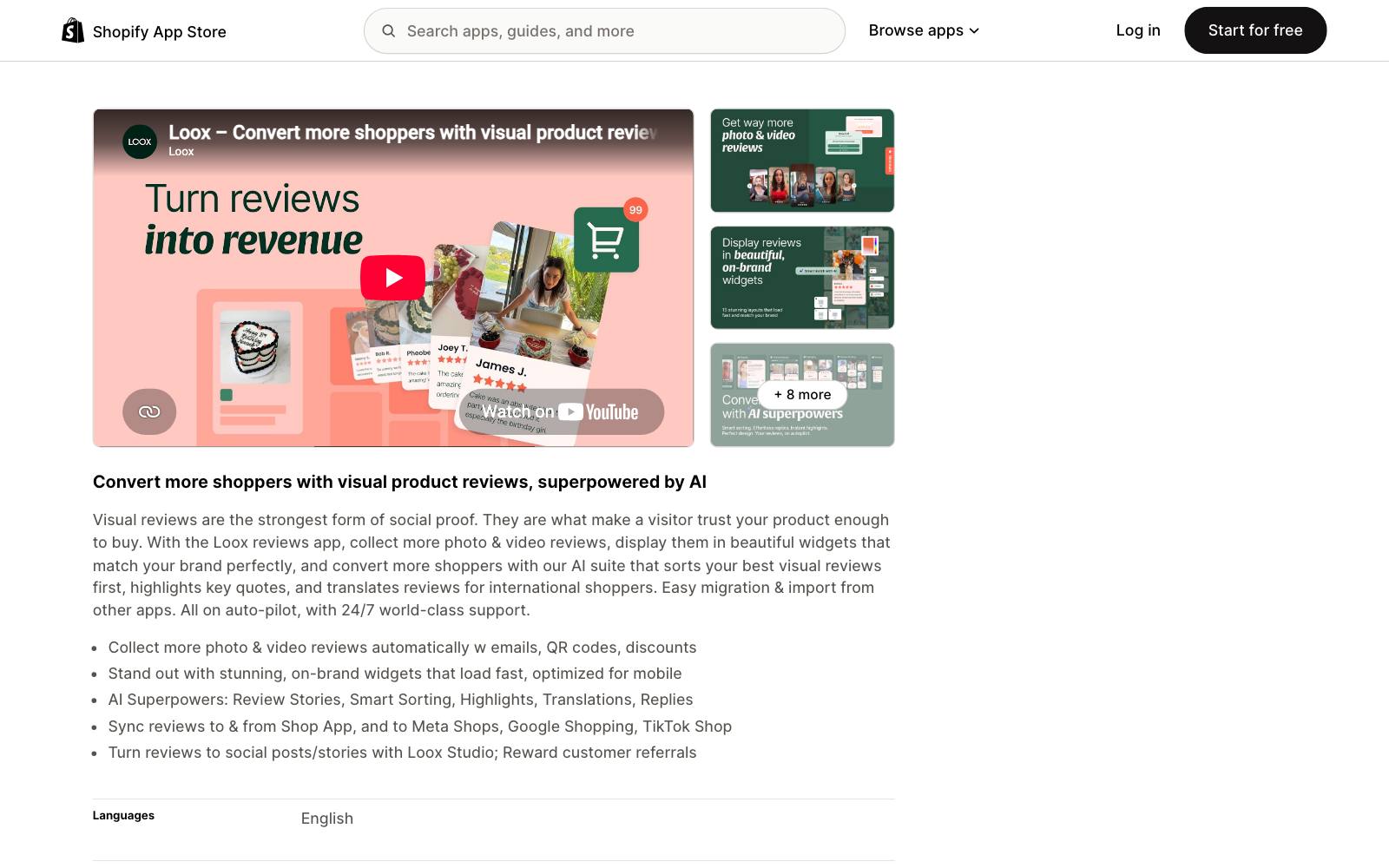
Best for: visual products where customer photos and videos sell.
What it does: Loox collects photo and video reviews through emails, QR codes and discounts.
It adds AI features like review summaries and smart sorting, and syncs reviews to the Shop app, Google Shopping, Meta and TikTok Shop.
Compare it head to head in Loox vs Judge.me.
Key features:
- Photo and video review collection with discounts for photos
- AI smart sorting, highlights and review summaries
- Reviews on product bundles
- Loox Studio to turn reviews into social posts
Pros:
- Strong focus on visual reviews
- High rating from a large review base
- Referral rewards built in
Cons:
- Paid plans are priced by order volume: 300 orders included, then $50 per extra 300
- Far more expensive than Judge.me at scale
- Shopify only
Pricing: free plan; $49.99/month for 300 orders; a $299.99/month tier above that; 14-day free trial, per the Loox Shopify listing (as of November 2026).
The loox.app pricing page lists the $49.99 Convert plan as unlimited orders, so check which terms apply when you sign up.
Rating: 4.9 from 10,029 reviews on the Shopify App Store.
In our archive: Blend Commerce showed photo reviews first on Goat Milk Stuff product pages.
Conversion rate rose +3.61%. Dave Diederen saw +6.26% revenue per visitor from customer video reviews.
8. Okendo
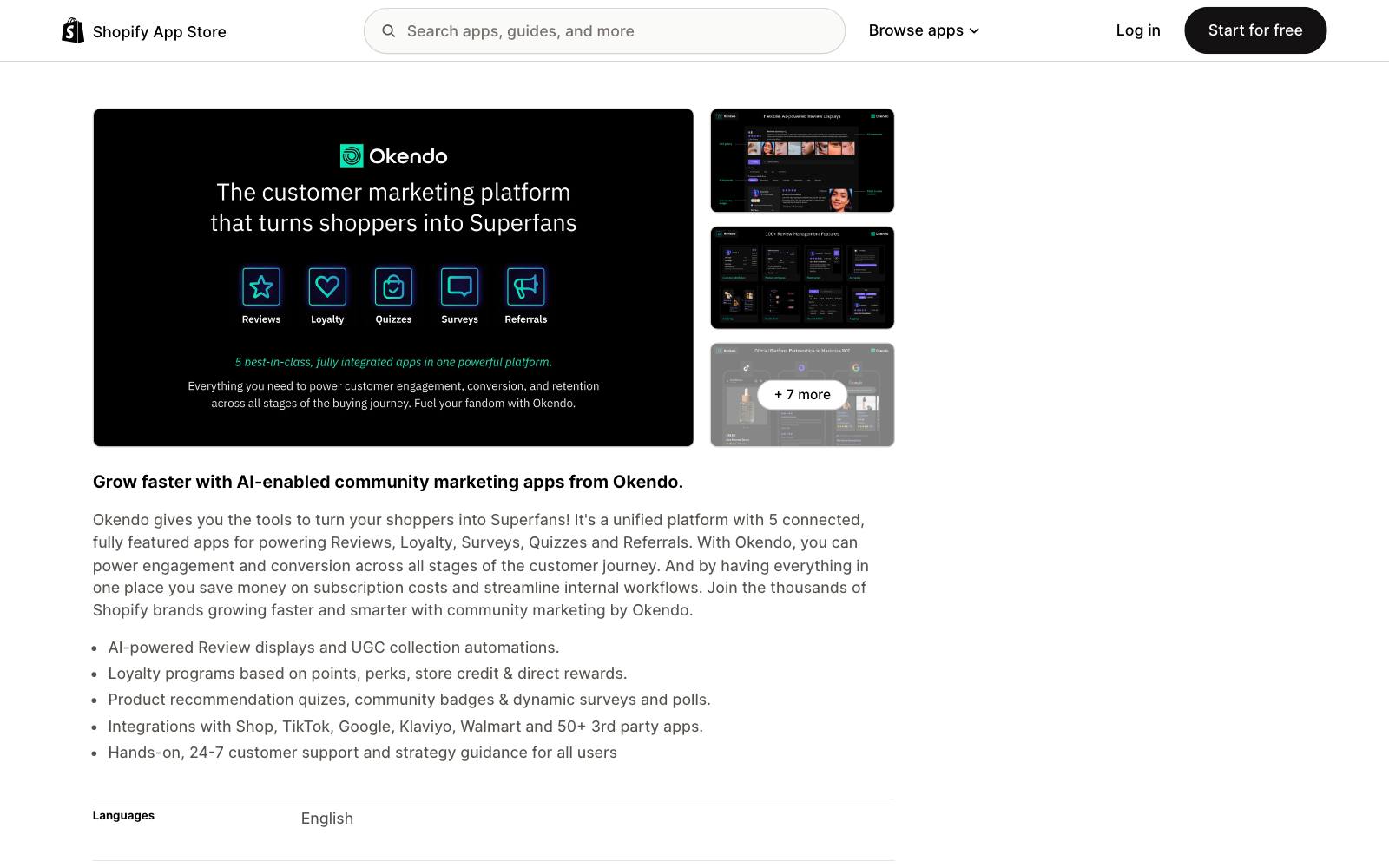
Best for: growing Shopify brands that want reviews, loyalty and referrals in one place.
What it does: Okendo bundles reviews, loyalty, surveys, quizzes and referrals.
The reviews app collects and displays reviews with AI summaries on higher tiers.
Key features:
- Automated review requests and a smart review form
- Review rewards engine
- AI review summaries and keywords (from $119/month)
- Connected loyalty and referral apps
Pros:
- One vendor for several retention tools
- Free plan to start; annual billing saves money
- Good fit once a brand outgrows a basic review app
Cons:
- The jump from $19 to $119/month is steep
- More than a small store needs
- Shopify focused
Pricing: free plan; $19/month ($204/year); $119/month; $299/month; 14-day free trial on paid plans, per the Okendo Shopify listing (as of November 2026).
Rating: 4.8 from 1,447 reviews on the Shopify App Store.
In our archive: Convertibles made star ratings and review counts prominent on collection cards for an adult wellness brand: +$31,287/month.
Gym King tried star ratings on collection cards and lost -10% revenue per visitor. Placement matters more than the app.
9. Trustpilot
Best for: any business, including SaaS and lead gen, that needs reviews on an independent site.
What it does: Trustpilot hosts company reviews on its own public site and gives you widgets to show your rating.
Because the reviews live on a third-party site, visitors who don't know you may trust them more.
Key features:
- Automated review invitations (50 a month on the free plan)
- Review widgets for your site
- In-app review collector on paid plans
- Works for any business, not just stores
Pros:
- Independent reviews carry more weight for unknown brands
- Free plan to start collecting
- Fits services, SaaS and lead-gen sites
Cons:
- Paid plans are expensive and need a 12-month commitment
- Prices are per domain
- You can't control what reviewers write in public
Pricing: free plan; Plus from $319/month per domain billed annually with a 14-day trial; Premium from $799/month; Enterprise is contact sales, per Trustpilot Business plans (as of November 2026).
In our archive: High Position added a Trustpilot review widget under Add to Basket at Express Watches.
Purchases rose +58.29%. FietsPunt saw +36.73% orders from a Trustpilot widget on product pages.
10. Senja
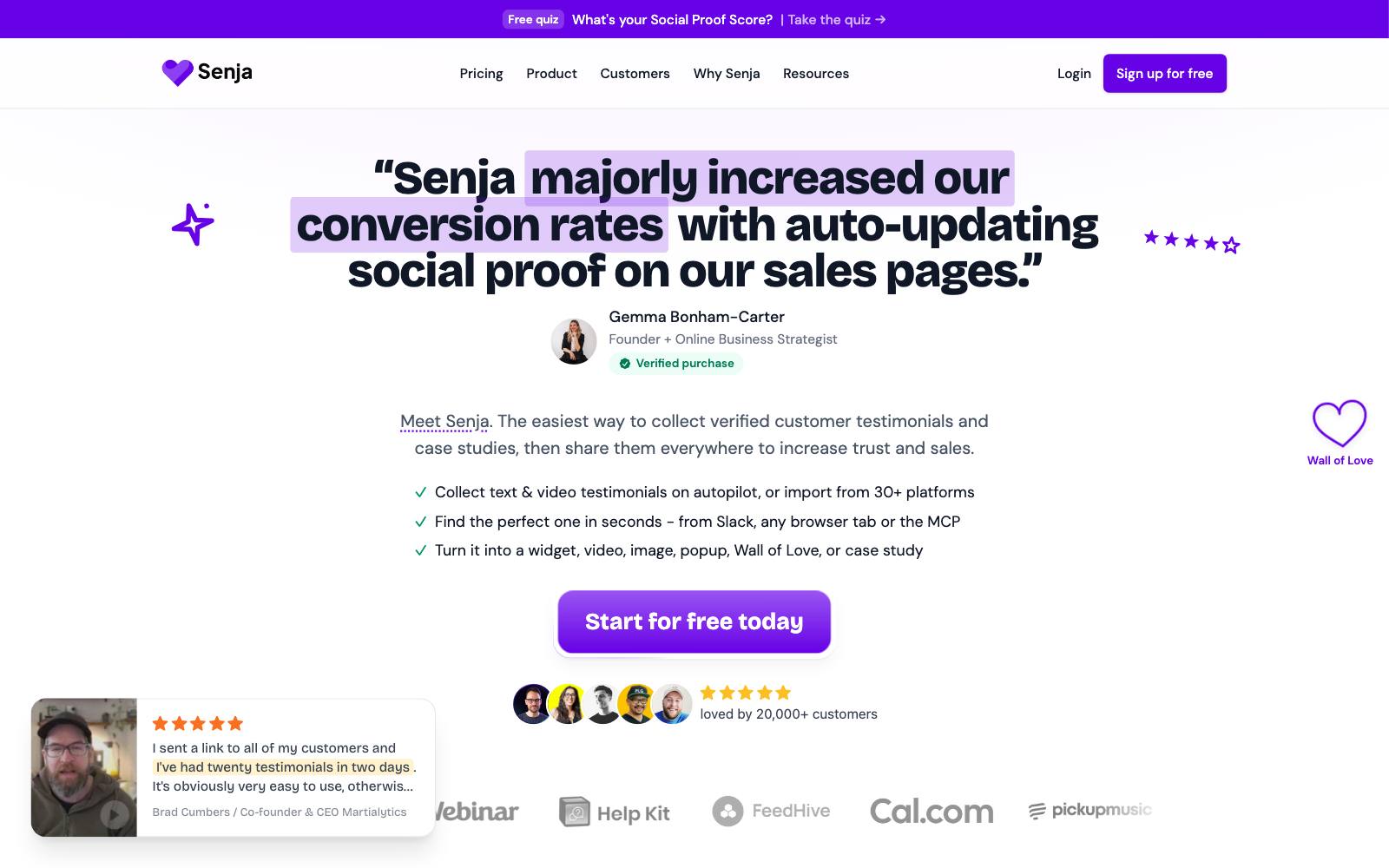
Best for: SaaS, agencies, coaches and lead-gen sites that sell on testimonials.
What it does: Senja collects text and video testimonials through forms, imports reviews from 18 platforms, and shows them in widgets and "Walls of Love". It can mark testimonials it can verify.
Key features:
- Collection forms and bulk invites
- Imports from social and review sites
- Unlimited widgets, even on the free plan
- Stripe sync to see which testimonial authors are paying customers
Pros:
- Built for non-store businesses, which most tools here are not
- Free plan covers 15 testimonials
- Video testimonials and clips for ads
Cons:
- No sales popups or live counters
- Free plan shows Senja branding
- Not a product review app for stores
Pricing: free plan; Starter $29/month; Pro $59/month; two months free on yearly billing, per the Senja pricing page (as of November 2026).
In our archive: Mida added testimonials to its sign-up page and sign-up completion rose +56.94%.
Which one is right for you
Shopify store on a small budget
Start with Judge.me for reviews, since reviews near the buy button have the strongest record in our archive.
Add ProveSource's free plan only if you want to test a popup.
Brand with strong visual products
Loox for photo and video reviews, or Okendo if you also want loyalty and referrals.
WordPress or WooCommerce
TrustPulse is the simplest fit, but budget for the Pro plan if you need WooCommerce data.
SaaS and lead gen
Senja for testimonials near sign-up forms, and Trustpilot if prospects need independent reviews. ProveSource or WiserNotify can show recent signups.
You want to test the message itself
WiserNotify has built-in notification A/B tests. For a clean test against no social proof at all, use a testing tool from our list of Shopify A/B testing apps.
You want someone to set it up and test it
Oliver Kenyon moved social proof and the Add to Cart button into the first mobile view on a product page, worth +$47,927/month.
What to look for
- Real data only: the app should pull from real orders, signups or reviews, never invented names or numbers.
- Inline placement: check whether it can show proof inside the page near the buy button, not only as a corner popup.
- Counts, not just names: "142 bought today" is stronger than one stranger in another city.
- Targeting: you should be able to limit messages to new visitors, certain pages or mobile.
- Pricing model: check whether you pay by visitors, notifications, orders or domains, and what happens at the cap.
- Page speed: one light script beats several apps each loading their own.
- A way to test: either a built-in split test or easy on/off control so you can run a holdout.
Real test results
In our archive, the clearest social proof wins are short lines next to the buy button.
NYX tested a "bought today" line under the buy button and its transaction rate doubled; the "viewed" version did less well.
 Visually saw +12.5% conversion from a "number bought" message at The Oodie.
Not every widget works: a Facebook likes widget at FietsPunt made no measurable change, and a Twitter badge at Bag Servant lost.
Visually Conversion Fanatics
Browse more in product page social proof tests, social proof examples and the social proof element hub.
Watch out for
Sales popups that lose. We don't yet have a clean test of a corner "someone just bought" popup in our archive, winning or losing.
What we do have: a Conversion Fanatics urgency message that did 32% worse, a "high demand" cart message from Clean Commit that was flat at +2.7%, not significant, and Dave Diederen's customer profile icons next to the star rating, which lost -3.84% revenue per visitor.
Run a holdout before you keep any popup.
Fake proof. Invented buyers, looping counters and "23 people viewing" that never changes are easy to spot.
In August 2024 the FTC announced a final rule banning fake reviews and testimonials.
Read more in our guide to social proof.
App stacking. A review app, a popup app, a countdown timer and trust badges each add scripts.
Check page speed after each install and remove what you don't test.
Mobile clutter. Corner popups cover buttons on small screens.
Clean Commit got +44.5% conversion just by moving a chat pop-up off key buttons.
See every category we cover on the tools hub.